The State of Meghalaya hosted its much-awaited Strawberry Festival 2025 on May 2–3, celebrating the region’s flavours, culture, and community spirit. Organized by Meghalayan Age Limited with the Tourism and Agriculture Departments, the festival promoted agro-tourism and rural livelihoods through cultural, educational, and recreational activities.
A Festival Rooted in Growth and Community
The festival was celebrated simultaneously across three key strawberry-growing regions of the state
- Syntung in East Khasi Hills,
- Sohliya in Ri-Bhoi District, and
- Darechikgre in West Garo Hills.
Local farmers and community initiatives have boosted strawberry cultivation in recent years. The festival celebrated this success and highlighted Meghalaya’s growing rural economy.
Highlights from the 2025 Festival
The Strawberry Festival 2025 offered a delightful blend of nature, culture, and creativity, making it one of the most memorable events in Meghalaya’s annual calendar.
1. Strawberry Picking Experiences
Visitors enjoyed picking ripe strawberries straight from the fields. In addition, they experienced firsthand the charm of Meghalaya’s farming life. Moreover, it provided an interactive and joyful way to connect with local growers while exploring the scenic farmlands that define the region’s rural beauty.
2. Strawberry Delicacies and Local Brands
The festival featured a vibrant range of stalls offering strawberry-based products, including wines, jams, ice creams, and traditional cakes, all made by local producers.
Among the standout participants was Tiewdohmaw Wine, a homemade organic wine brand from Shillong, which quickly became a visitor favourite. The brand is known for its handcrafted fruit and berry wines, made through traditional fermentation with natural yeast.
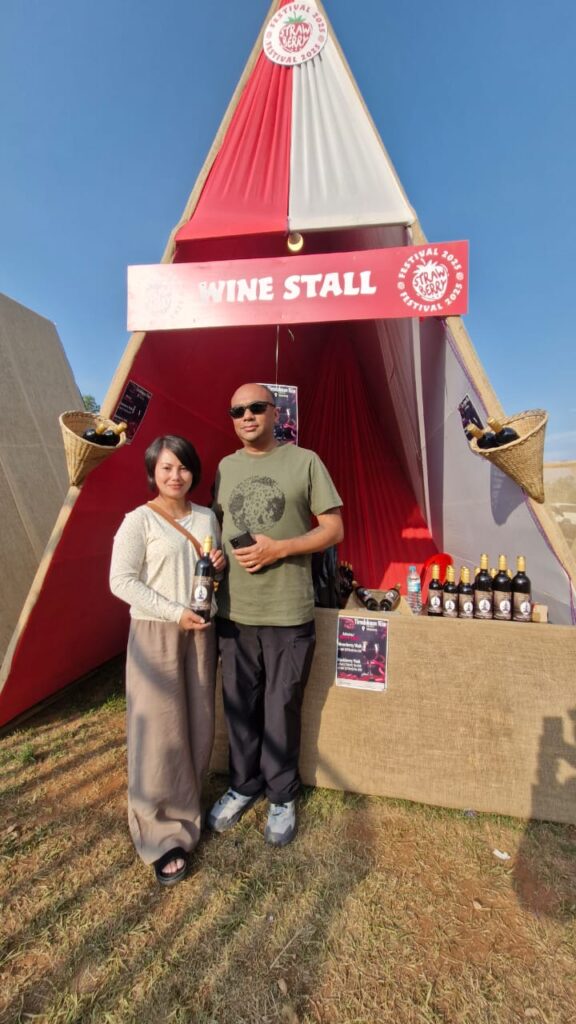
Tiewdohmaw Wine’s stall was one of the most admired at the festival, drawing crowds from different parts of Meghalaya and beyond. Visitors praised the brand for its smooth, fruity flavours and its authentic story rooted in local craftsmanship.
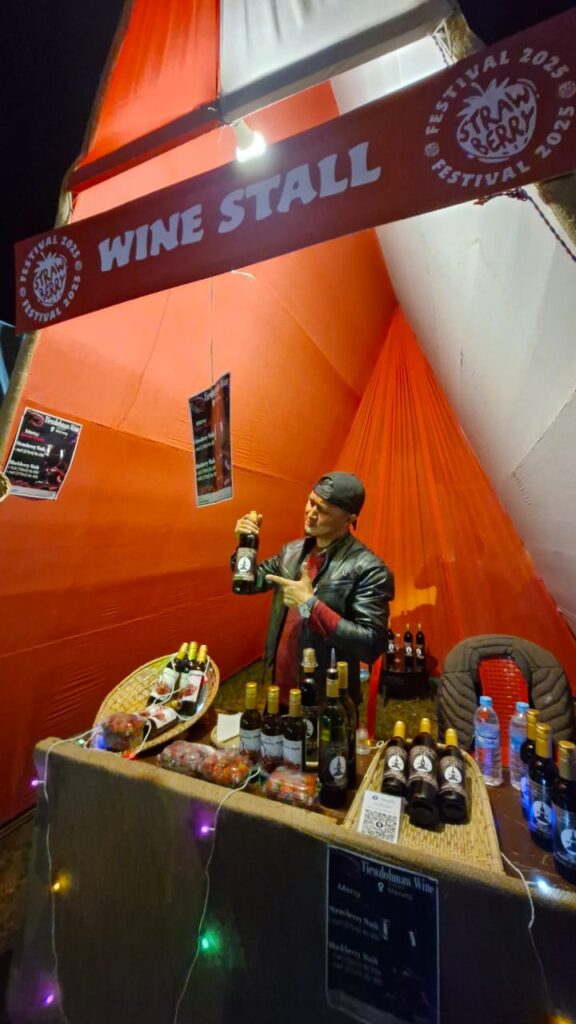
The team showcased signature wines like strawberry and wild berry, letting guests sample and learn about their organic process. Their presence highlighted Meghalaya’s growing passion for sustainable, homegrown beverages and community-driven brands.
This also supports Meghalaya’s wine tourism, where visitors enjoy local wines amid scenic landscapes. Initiatives like the fruit wine incubation center and evolving wine policies are helping brands like Tiewdohmaw combine innovation with heritage.
3. Interactive Workshops
Adding an educational touch to the festivities, several hands-on workshops were organized on jam-making, baking, and preparing strawberry-based treats. Visitors had the chance to learn directly from local producers and artisans, making the experience both informative and engaging.
4. Music, Culture, and Performances
As the sun set over the rolling hills, the festival grounds came alive with folk music, traditional dances, and live performances. Local artists showcased Meghalaya’s rhythmic heartbeat through song and dance, transforming each venue into a vibrant celebration of creativity, heritage, and togetherness.
5. Promoting Agro-Tourism and Rural Livelihoods
The festival reinforced Meghalaya’s agro-tourism initiatives and consequently boosted rural livelihoods. In addition to helping farmers sell produce directly, it promoted small-scale entrepreneurship and raised awareness about eco-friendly farming practices.
Through Meghalaya’s Age Limited, and in collaboration with the Departments of Tourism and Agriculture & Farmers’ Welfare, the government played an active role. Consequently, the festival was not just a celebration, but also a significant step toward economic empowerment and responsible tourism in the state.
